Data Gathering in Qualitative Risk Analysis | 2nd Tool
Oct 22, 2026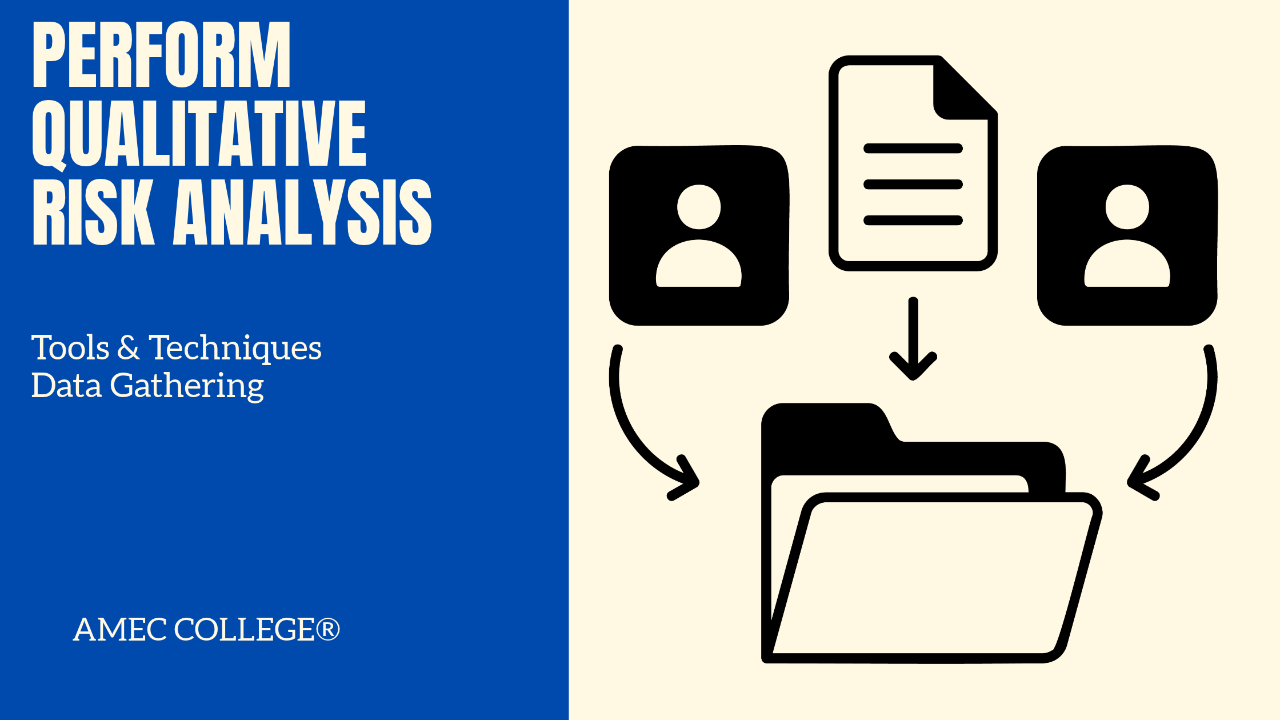
In Australia's complex built environment, navigating evolving National Construction Code (NCC) mandates, planning overlays, and supply chain volatility, evaluating risks accurately is vital to protecting project viability and practice fee margins.
While Expert Judgment provides the specialised depth needed to interpret complex threats, Data Gathering serves as the essential second tool in the Perform Qualitative Risk Analysis process under PMBOK® standards, providing the structured methodology to collect raw, unbiased risk inputs across the entire project ecosystem.
Understanding Data Gathering vs. Expert Judgment
In qualitative risk management, it is critical to distinguish between who evaluates the risk and how the information is collected:
- Expert Judgment (The Source): Relies on the specialised experience of senior architects, structural engineers, or legal advisors to interpret complex risk scenarios.
- Data Gathering (The Method): Provides a structured framework to capture broad, unfiltered data from a diverse spectrum of project participants including junior architects, site superintendents, council officers, and client representatives.
While Expert Judgment provides analytical depth, Data Gathering delivers necessary breadth. Combining both ensures that qualitative risk scoring is grounded in empirical reality rather than subjective assumptions.
Core Data Gathering Techniques in Qualitative Risk Analysis
-
Structured & Semi-Structured Interviews: Conducting confidential interviews with key stakeholders allows team members to express candid perspectives regarding risk likelihood, financial impact, detectability, and schedule urgency. Confidential settings encourage participants to speak openly about potential design errors, consultant scope gaps, or client budget constraints without fear of political backlash.
-
Risk Brainstorming Sessions: Facilitating open, structured brainstorming across multidisciplinary design teams encourages multi-faceted risk discovery. When guided by a Risk Breakdown Structure (RBS), brainstorming uncovers non-obvious risks spanning structural engineering, town planning, environmental constraints, and contractor capability.
-
Checklists and Historical Audits: Drawing upon practice archives, post-occupancy evaluations, and regulatory compliance checklists ensures that recurring industry hazards such as NCC Part C fire separation or Part J energy performance updates are systematically evaluated during qualitative scoring.
-
Surveys and Questionnaires: Distributing targeted questionnaires to broader stakeholder groups, sub-consultants, and community representatives enables practices to gather quantitative and qualitative feedback on specific project variables, such as local supply chain lead times or council approval trends.
Application and Benefits in Australian Architectural Practice
Deploying structured data gathering techniques during schematic design and development documentation offers distinct operational advantages:
- Eliminates Ground-Level Blind Spots: Captures operational and site-level insights that senior executives or external experts might overlook.
- Improves Data Quality and Credibility: Provides unfiltered data required to perform rigorous Risk Data Quality Assessments, ensuring qualitative scores reflect real-world likelihood and impact.
- Mitigates Cognitive Biases: Counteracts optimism bias and groupthink by gathering independent inputs before entering collaborative risk workshops.
- Supports Professional Competency: Aligns practice workflows with AS ISO 31000 risk management standards and the National Standard of Competency for Architects (NSCA 2021).
Continuing Professional Development (CPD) Training
Elevate Your Practice with Accredited CPD Training
Mastering qualitative risk analysis tools is essential for leading resilient architectural projects and protecting practice profitability. Explore our 12-Hour Online Risk Management Course for Architects, fully aligned with 12 formal CPD points and mapped directly to the NSCA 2021 (National Standard of Competency for Architects).