Risk Register | An Output in Architectural Risk Identification Process
Oct 06, 2026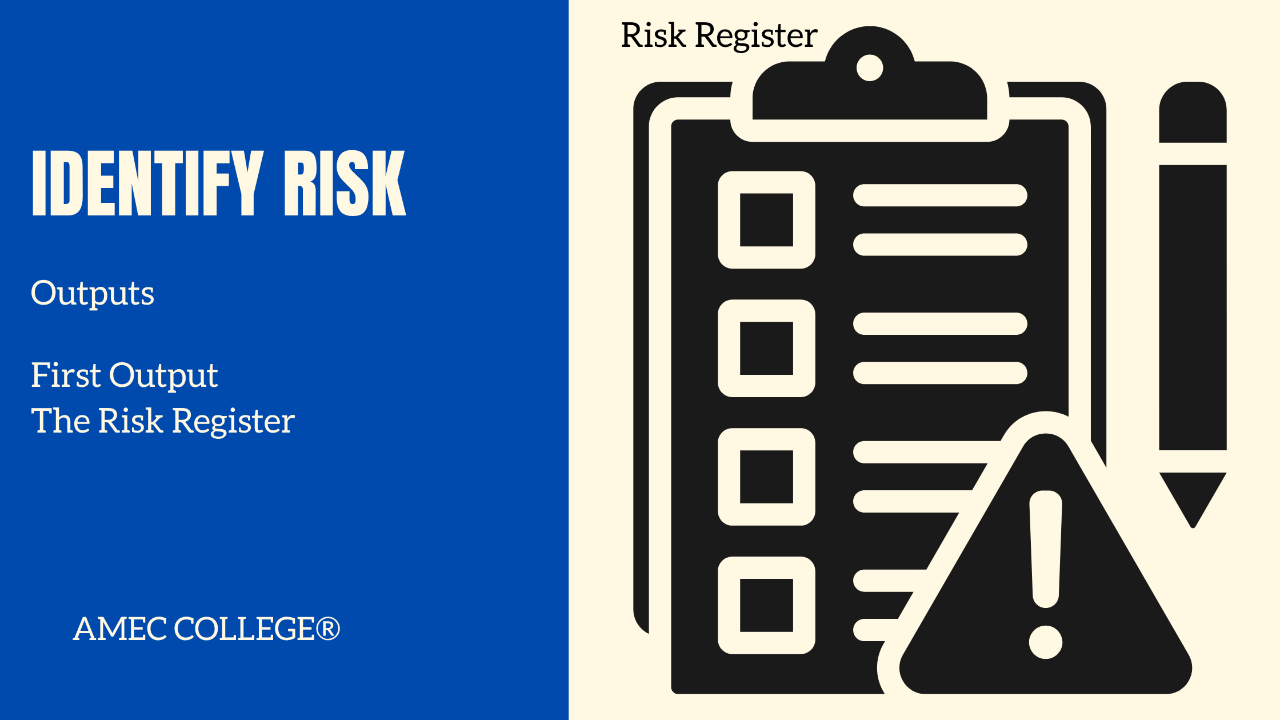
In architectural project management, unearthing potential hazards during design workshops or site reviews is only effective if those findings are systematically captured, analysed, and tracked.
Under the PMBOK® framework, the Risk Register serves as the primary operational output of the Identify Risk process.
It transforms raw, qualitative observations into an organised, living database that guides day-to-day decision-making throughout the project lifecycle.
In Australian architectural practice, where projects face complex planning overlays, statutory National Construction Code (NCC) updates, supply chain volatility, and tight consultant coordination windows, the Risk Register acts as the central hub for practice risk governance.
How the Risk Register Functions as a Process Output
During the Identify Risk process, architectural teams analyse project baselines, contracts, consultant inputs, and historical lessons learned. The output of these activities is recorded directly into the Risk Register. Rather than remaining a static document created at project inception, the register evolves dynamically as qualitative analysis, response planning, and risk monitoring take place.
A comprehensive architectural Risk Register incorporates 13 core elements:
- Unique Risk Identifier (ID): A distinct code (e.g., R0001) that ensures clear referencing across meeting minutes, consultant logs, and client reports without confusion.
- Structured Risk Statement: Formatted syntax detailing the Cause (e.g., delayed geotechnical reporting), the Event (unanticipated soft soils on site), and the Impact (footing redesign and 4-week delay).
- Potential Risk Owner: A designated practitioner (e.g., Senior Structural Engineer or Project Principal) responsible for tracking and managing the risk.
- Probability (Likelihood): Qualitative (High/Medium/Low) or quantitative percentage ratings of occurrence.
- Impact: Evaluated potential severity across project objectives, cost, time, scope, or quality.
- Risk Score: Combined metric (Likelihood × Impact) used to prioritise risks for action.
- Risk Response Strategy: Planned response path (Avoid, Mitigate, Transfer, Accept, or Exploit).
- Revised Probability: Updated likelihood post-mitigation strategy.
- Revised Impact: Reduced impact rating following planned response implementation.
- Revised Risk Score: Recalculated risk priority rating demonstrating mitigation effectiveness.
- Action Tasks: Specific steps, deadlines, and assigned personnel to implement the response.
- Status: Real-time operational state (e.g., Open while active, Closed when resolved).
- Comments: Contextual notes, decision logs, and stakeholder feedback.
How the Risk Register Helps Architectural Practices
- Establishes Clear Accountability: Assigning a specific risk owner prevents technical risks such as authority approval backlogs or performance specification ambiguities from falling through the cracks.
- Provides Traceability & Multi-Phase Control: Tracks how a risk evolves from early schematic design through to construction contract administration, providing an audit trail for quality assurance and Professional Indemnity (PI) protection.
- Protects Fee Margins & Project Timelines: By converting vague uncertainties into actionable response tasks with revised risk scores, architectural practices prevent profit erosion and costly site variations.